Regenera Activa
Autologous Micrograft Treatment for Pattern Hair Loss
Regenera Activa is a minimally invasive autologous micrografting treatment used for selected patients with androgenetic alopecia, also known as male or female pattern hair loss.
The treatment uses a small sample of the patient’s own healthy scalp tissue to prepare a micrograft suspension, which is then introduced into areas of thinning hair. It is generally considered in patients with early to moderate hair thinning where active follicles are still present.
Regenera Activa should not be viewed as a replacement for all other hair-loss treatments, and it is not designed to recreate follicles in areas where they have already been permanently lost. For a broader overview of causes and treatment options, read our guide to Hair Loss Treatment in Singapore →
What Is Regenera Activa?
Regenera Activa is an autologous micrografting procedure.
“Autologous” means that the tissue used in the treatment comes from the patient’s own body.
During treatment, a small sample of healthy scalp tissue is collected from a donor area and mechanically processed to create a micrograft suspension.
This suspension contains biological components derived from the patient’s own tissue, including progenitor cells and extracellular matrix components, and is then injected into selected areas of thinning hair.
The treatment is primarily associated with androgenetic alopecia, where hair follicles gradually undergo miniaturisation over time.
How Does Regenera Activa Work?
The procedure can be understood in three main stages.
STEP 1: TISSUE COLLECTION A small amount of healthy scalp tissue is collected from a suitable donor area. The donor site is generally selected from an area where the hair follicles are less affected by pattern hair loss.
2. MICROGRAFT PREPARATION The tissue is mechanically processed using the Regenera system to prepare an autologous micrograft suspension. The process is performed using the patient’s own tissue rather than donor material.
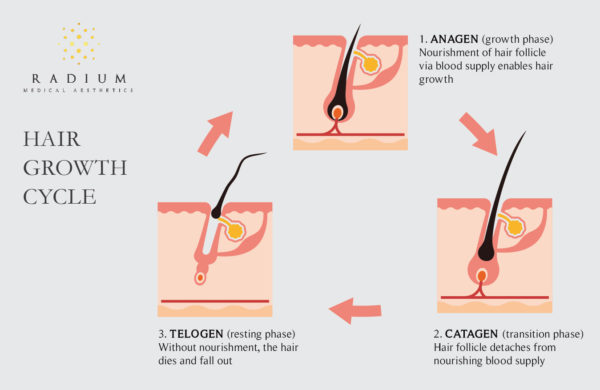
3. SCALP INJECTION The prepared micrograft suspension is then introduced into selected thinning areas of the scalp. The aim is to support the biological environment around existing follicles and the hair-growth cycle.
Who May Be Suitable for Regenera Activa?
Regenera Activa may be considered for selected men and women with:
- early to moderate androgenetic alopecia
- progressive hair thinning
- reduced hair density
- existing follicles that remain active
- preference for a minimally invasive regenerative approach
- desire for an adjunct to other hair-loss treatment
The manufacturer’s professional information also positions it for androgenetic alopecia and for selected patients with preserved follicular units.
Who May Not Be Suitable?
Regenera Activa may not be appropriate for every type of hair loss.
For example, hair loss caused by autoimmune disease, scarring alopecia, active scalp infection or certain diffuse hair-loss patterns requires a different approach. The manufacturer’s professional guidance specifically lists active scalp infection, autoimmune alopecia and scarring alopecia among situations where treatment should not be performed.
This is why diagnosis should come before treatment.
Regenera Activa vs Hair Regrowth Laser
Both are non-surgical options, but they work differently.
Hair regrowth laser delivers controlled energy to the scalp with the aim of supporting existing follicles and the scalp environment.
Regenera Activa uses an autologous micrograft suspension prepared from the patient’s own scalp tissue.
Some patients may be better suited to one approach, while others may be considered for combination treatment.
Learn more about hair regrowth laser in Singapore →
Regenera Activa vs Medication
Medication remains an important part of managing androgenetic alopecia for many patients.
Regenera Activa should not automatically be positioned as a substitute for topical or oral treatment.
The official Regenera Activa information notes that it may be combined with treatments such as minoxidil or finasteride.
The appropriate approach depends on the patient’s diagnosis, stage of hair loss, medical history and treatment preferences.
Regenera Activa vs FUE Hair Transplant
These treatments serve very different purposes.
Regenera Activa is generally used where existing follicles remain present and the aim is to support the scalp and follicular environment.
FUE hair transplantation physically moves follicles from a donor area to an area where density has already been lost.
Patients with more advanced hair loss or established bald areas may therefore be better candidates for transplantation rather than regenerative treatment alone.
Learn more about FUE hair transplant in Singapore →
Can Regenera Activa Regrow Hair in Completely Bald Areas?
Regenera Activa is more relevant where active follicles remain.
It should not be described as creating completely new follicles in areas where follicular structures have been permanently lost.
Patients with established bald areas may need to consider hair transplantation instead.
Can Regenera Activa Stop Hair Loss Permanently?
No treatment should be described as permanently stopping progressive pattern hair loss.
Androgenetic alopecia is a chronic condition and may continue to progress.
Ongoing medical or supportive treatment may still be needed depending on the patient’s condition.
Can Regenera Activa Be Combined With Other Hair Loss Treatments?
Yes, in selected patients.
Depending on the diagnosis, the treatment may be combined with topical or oral medication, laser treatment, other scalp-directed therapies or hair transplantation.
Combination treatment should be based on the patient’s hair-loss pattern and stage rather than routinely combining multiple procedures.
Learn more about Dr Phoon Yi Shan →
Frequently asked questions about Regenera Activa in Singapore
Yes, selected men and women with androgenetic alopecia may be considered for treatment.
No.
Regenera Activa does not move large numbers of follicles from one part of the scalp to another.
Instead, it uses a small sample of the patient’s own tissue to prepare an autologous micrograft suspension.
They are different treatments and should not be directly ranked.
Minoxidil is a pharmacological treatment commonly used in pattern hair loss, while Regenera Activa is an autologous micrografting procedure.
Some patients may be suitable for both.
Again, they work differently.
Hair laser is an energy-based treatment intended to support existing follicles, while Regenera Activa uses tissue-derived autologous micrografts.
The appropriate choice depends on diagnosis and stage of hair loss.
Possibly.
Patients with androgenetic alopecia may still require ongoing medical treatment because Regenera Activa does not remove the underlying tendency toward progressive follicular miniaturisation.
It may be considered as an adjunctive treatment in selected patients. The manufacturer also positions the treatment for post-transplant follicular support.
Temporary effects may include mild scalp tenderness, redness or sensitivity around the treatment or donor areas.
Most patients can resume normal daily activities relatively soon, depending on individual recovery.
The treatment is commonly performed as a single in-clinic procedure, although follow-up or repeat treatment may be considered depending on response and the doctor’s assessment.
According to clinical data and treatment providers, the results from a single Regenera Activa session can persist between 1 and 2 years in many cases – sometimes longer depending on individual factors such as age, overall health, scalp condition, and post-treatment care.
Because hair loss often involves genetic, hormonal or lifestyle factors, long-term success typically requires maintenance. Many clinics recommend repeat treatments every 12–18 months to sustain results and maximize hair density over time.
Benefits
-
Uses the patient's own scalp tissue -
Minimally invasive autologous micrograft procedure -
May support hair density and hair quality in selected patients -
Can be considered for early-to-moderate pattern hair loss -
May be combined with other hair-loss treatments where appropriate
Best For
Men and women with early to moderate androgenetic alopecia or progressive thinning where active follicles remain, who are looking for a minimally invasive regenerative treatment as part of a broader hair-loss management plan.