Keloid Removal
Keloid Removal Treatment for Hypertrophic Scars
What is keloid?
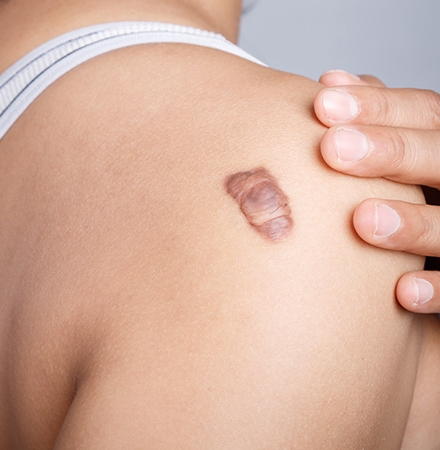
Keloids form when overzealous skin cells grow in disorganised bundles of protein as your body recovers from the wound. When the healing mechanism in your skin becomes excessive after an injury, an overgrown scar develops, causing it to become raised. Sometimes, these keloids can grow bigger and wider than the original injury. The problem can range from being very mild, to being more serious, causing discomfort and inconvenience. Keloids are not common, but are more likely to form in people with dark skin tone.
What Causes Keloids?
Keloids can form when the skin’s healing response becomes excessive after an injury. Instead of producing just enough collagen to repair the wound, the body continues to produce scar tissue, causing a raised, firm scar that may grow beyond the original injury.
Common triggers include cuts, burns, acne scars, tattoos, surgical wounds and ear piercings. Even minor trauma, such as insect bites or scratches, may lead to keloid formation in individuals who are prone to this skin condition.
Certain people may also have a higher risk of developing keloids. This includes individuals with darker skin tones, younger patients between the ages of 10 and 30, and those with a family history of keloids. Hormonal changes during puberty or pregnancy may also influence how aggressively scars form.
Can Keloids Be Prevented?
Keloids cannot always be prevented, especially if you are genetically prone to developing them. However, you can lower your risk by avoiding unnecessary skin trauma such as tattoos, elective piercings or repeated irritation to the skin, particularly if you have a family history of keloids or have developed keloids before.
If you choose to proceed with ear piercings, surgery or other procedures that break the skin, proper wound care is important. Keeping the wound clean, avoiding tension on the healing skin, and following your doctor’s aftercare instructions may help reduce abnormal scar formation.
In some cases, doctors may recommend preventive measures such as silicone gel, silicone sheets, pressure therapy or early treatment of thickening scars. These options may help reduce scar height, itch and discomfort in suitable cases, but they should be used consistently and under appropriate guidance.
Can Keloids Go Away On Its Own?
Unfortunately, keloids are permanent scars that won’t go away on its own. In fact, it may continue to grow for weeks and months. They may eventually stop growing at some point, but they do not fade away or subside on its own.
How Are Keloids Treated?
The most suitable treatment for keloids depends on the size, location, thickness, symptoms and how long the scar has been present. Some keloids may respond to corticosteroid injections, laser treatment, silicone gel, pressure therapy or a combination of treatments to help flatten, soften and reduce redness.
For larger or more persistent keloids, surgical excision may sometimes be considered. However, surgery alone is usually not recommended because keloids have a tendency to grow back, sometimes larger than before. When surgical excision is performed, it is often combined with follow-up treatments such as steroid injections, laser therapy, pressure therapy or silicone-based scar care to reduce the risk of recurrence.
Because keloids are a recurrent skin condition, treatment usually requires patience and repeated sessions over several months. A doctor’s assessment is important to determine whether non-surgical treatment, combination therapy or surgical removal is more appropriate.
The eventual goal of keloid treatment is to flatten, soften and shrink the raised scar tissue. It is challenging to treat because keloids can sometimes come back after treatment. Lasers are commonly used to flatten the scar. Corticosteroid injections are an option to effectively shrink the scar. At Radium Medical Aesthetics, we device a 3-step treatment protocol for treating keloid scar:
CORTICOSTEROID Injected directly into the scar to flatten the keloid.
LASER TREATMENT A gentle laser is applied to the scar to reduce skin redness and inflammation of the skin. It also helps to reduce blood flow to the scar tissue.
BOTULINUM TOXIN Micro-injections of botulinum toxin are administered around the keloid to decrease the muscular tensile force of the scar and also inhibit the modulation collagen deposition and inflammatory cytokines.
How Many Sessions of Keloid Treatments Do I need?
It depends on several factors such as the size and location of the keloid. It also depends on how the scar responds to the treatment. In general, scar treatments take several months to see visible results. You need to work closely with your doctor to discuss and work out a treatment plan.
Typical Cost of Keloid Treatment in Singapore
The cost of keloid treatment in Singapore varies depending on the size and location of the keloid, the severity of the skin condition, and the type of treatment required. Options may include corticosteroid injections, laser treatment, botulinum toxin, silicone gel scar care, cryotherapy or, in selected cases, surgical excision combined with follow-up treatments to reduce recurrence.
For most patients, corticosteroid injections are one of the most common first-line options, and these typically cost between S$150 and S$300 per session.
Laser treatments such as vascular or fractional CO2 lasers are also frequently used to reduce redness, flatten raised tissue, and improve texture; these generally range from S$200 to S$500 per session, depending on the device and number of passes performed.
Botulinum toxin treatment may cost between S$300 and S$1,000 per session, depending on how large the scar tissue is.
Cryotherapy, which is often recommended for small keloids or earlobe keloids, may cost between S$250 and S$600 per session. In more severe or persistent cases, surgical removal may be necessary, and prices usually start from around S$800, with additional costs for follow-up injections or laser therapy to prevent recurrence.
Because most keloids require multiple sessions and continued maintenance to minimise regrowth, the total cost will depend on the treatment plan recommended by your doctor.
Benefits
-
 Reduce appearance of keloid on your body
 -
Soften and shrink the scar tissue