Regenera Activa
Effective Hair Loss Treatment In Singapore
Just in America alone, it was reported that an estimated 80 million men and women have varying degrees of hereditary hair loss, or alopecia. Although it can affect your entire body, it happens more frequently on the hair on the scalp. It is perfectly normal to lose about 50 to 100 hairs on your head a day. If you start to notice that you are dropping more hair than usual, it may be time for you to see a doctor so that they can determine the underlying cause of your hair loss and advise an appropriate treatment plan.

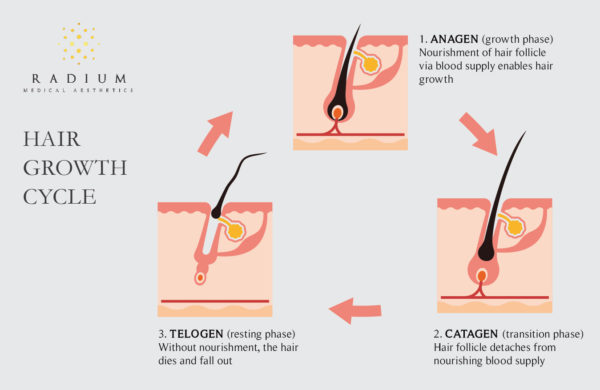
Stages of hair growth
There are 3 stages of the hair lifecycle: Anagen, catagen, and telogen.
The anagen phase is also known as the ‘growth phase’. This is the phase where each strand of hair is at its own stage of development. The rate of hair growth at this stage is about 1 cm per month. It can last from two to six years, depending on the genetics. The longer the hair stays in this phase, the longer it will grow.
The catagen phase is also known as the ‘transitional phase’. This phase usually lasts for about two weeks. The hair follicle shrinks and disintegrates, cutting the hair from its bloody supply. During this phase, the follicle shortens, causing the hair shaft to be pushed upwards.
The telogen phase is known as the ‘resting phase’. The follicle remains dormant for one to four months. About ten to fifteen percent of the hairs on your head are in this phase at any given time. At some point, the follicle will grow again, and breaks out of the telogen phase when new hair shaft is produced.
Common types of hair loss
ANDROGENETIC ALOPECIA The most common type of hair loss that affects millions of men and women globally. The terms – ‘male pattern hair loss’ and ‘female pattern hair loss’ may be more familiar to you. Androgenetic alopecia is largely caused by hereditary factors. But if treated early, it can be managed with proper treatment, medication and making certain lifestyle changes.
TELOGEN EFFLUVIUM When large number of hair follicles on the scalp enter the resting phase of the hair growth cycle, your hair fall out without new hair growth for a long time. This condition does not cause complete baldness, but your hair may appear very thin, especially at the crown and temples.
ANAGEN EFFLUVIUM Certain medical treatments such as chemotherapy can lead to rapid hair loss. The goal of chemotherapy is to kill cancer cells, but one of the side effects is to stop hair production in the scalp and other parts of the body as well. After chemotherapy treatment ends, your doctor can recommend some treatments and medications to help your hair grow back more quickly.
ALOPECIA AREATA It is a common autoimmune disorder that attacks healthy tissues, including the hair follicles. It causes hair to fall and prevents new hair from growing. It can affect both children and adult and begin suddenly without warning. One distinct sign is random bald patches on the scalp. If not treated early, it may lead to complete hair loss.
TINEA CAPITIS Caused by fungal infection of the scalp. It is sometimes known as scalp ringworm. If it infects the hair shaft and scalp, it may lead to hair fall.
SCALP FOLLICULITIS An inflammatory disorder of the hair follicles in the scalp, characterized by small, itchy pustules on the scalp. When left untreated, the condition can become more serious and it may cause hair loss in severe cases.
Causes of hair loss
Finding the cause of hair loss can be challenging because there can be several factors that may lead to thinning hair. Although hair loss can be associated with medical conditions including thyroid, hormonal imbalance, and medication, you may be relieved to hear that most cases are often due to predetermined genetic factors and overall aging process.
MEDICATION A number of medications that doctors prescribe for common health problems may contribute to hair fall. Blood-thinning medications, NSAIDs, oral contraceptives, drugs for depression, and beta and calcium channel blockers are just some examples of common drugs that have reported cases of hair fall in patients who consume them. Too much vitamin-A or retinoids may cause hair loss as well.
PREGNANCY Hormonal fluctuations and imbalance is a common occurrence following pregnancy and childbirth. It takes time to restore the hormonal balance, so it is common for postpartum mothers to notice thinning hair and bald patches. This usually occurs about two to three months after the delivery.
EMOTIONAL STRESS Although emotional stress is less likely to cause hair loss than physical stress, major events that you undergo may put you through a lot of emotional turmoil. For example, the death of a loved one, unemployment, or divorce may cause your hair follicles to stay in its telogen (resting phase) longer than usual, giving rise to the impression of hair loss.
HEREDITARY Male- and female-pattern baldness are hereditary. Hair loss can be passed down from parents to their children. You can inherit these genes from either parent. You are more likely to suffer from hair loss if your mother, or close relatives have experienced hair loss.
PHYSICAL STRESS Any form of physical stress such as car accident, severe illness, or surgery can cause temporary hair loss.
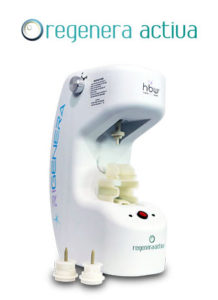
Treatment of hair loss with Regenera Activa
What is Regenera Activa?
Regenera Activa aims to provide an intensive scalp treatment to aid in stronger, thicker hair growth.
It is specially developed to regenerate and kickstart hair growth process using autologous micrograft. What this means is that it uses your body’s own ability to use functioning hair follicles to stimulate the growth of hair follicles in inactive areas of the scalp.
Regenera Activa is an FDA-approved, CE-marked, and HSA-approved device for the purpose of stimulating healthy hair growth.
How does Regenera Activa hair loss treatment work?
STEP 1: Micro-grafts are extracted from healthy areas of the scalp.
STEP 2: Preparation of the extracted micro-grafts.
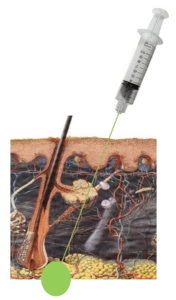
STEP 3: The doctor reintroduces the healthy micro-grafts into areas of hair loss to repair and kickstart hair growth in the treated areas.
Benefits
-
 Strengthen the scalp by starting the hair growth process
 -
Restore and rejuvenate the scalp with minimal downtime
-
Stimulate the growth of hair follicles without hair transplant
-
Reactivate inactive areas of the scalp
Best For
Men or women who are experiencing early onset of hair loss, but may not be prepared to undergo a FUE or FUT hair transplant yet.
Frequently asked questions about Regenera Activa hair loss treatment in Singapore
FUE (Follicular Unit Extraction) is a surgical hair restoration technique where individual hair follicles are harvested from a donor area and transplanted into thinning or balding regions. Because the follicles are physically relocated, FUE is ideal for individuals with more advanced hair loss or visible bald patches. The results are permanent, but the procedure involves recovery time, post-care, and higher cost due to its surgical nature.
Regenera Activa, on the other hand, is a non-surgical regenerative treatment designed for early to moderate hair thinning. Instead of transplanting follicles, it uses a small sample of your own scalp tissue – rich in nutrients and growth factors – to stimulate and repair existing hair follicles. This helps improve density, slow hair loss, and strengthen the scalp environment with minimal downtime and discomfort.
In general, FUE is better suited for patients who have significant loss and require new follicles to restore coverage, while Regenera Activa is best for those who still have active follicles and want to boost regrowth without surgery. Some patients even combine both, using Regenera Activa to maintain scalp health after a transplant.
The cost of Regenera Activa in Singapore varies depending on factors such as the extent of hair thinning, size of the scalp area treated, and whether additional scalp or maintenance sessions are needed. Generally, clinics offering this treatment quote a price range between SGD 2,000 and SGD 4,000 per session. This reflects the personalised nature of the treatment, which uses the patient’s own scalp tissue to regenerate follicles.
Many clinics may also recommend follow-up booster sessions or complementary scalp therapies (e.g. scalp rejuvenation, laser therapy) to maximise results – these can influence the total spend over a 12- to 18-month period. As with any hair loss treatment, a proper consultation and scalp assessment are necessary to determine the actual cost for each individual.
Overall, while Regenera Activa may represent a higher initial investment compared to topical treatments or general scalp care, its regenerative approach, minimal downtime, and long-term hair density improvements often justify the expense for patients seeking a durable, non-surgical solution.
Regenera Activa is generally regarded as a safe, minimally invasive procedure – especially compared to surgical hair transplants. Because the treatment uses the patient’s own scalp tissue to stimulate hair-regrowing factors, the risk of rejection or allergic reactions is extremely low.
That said, like any medical or aesthetic procedure, it is not without potential side effects. The most commonly reported effects are mild and temporary. Patients may notice redness, slight swelling, or tenderness at the donor (where tissue is harvested) or recipient sites (where micro-grafts are injected).
Some patients also report mild bruising and occasional slight discomfort or pressure during the micro-graft injection process – though most patients describe this as a minor pinch or heaviness rather than outright pain.
Because Regenera Activa involves extracting a small scalp tissue sample (via a punch biopsy), there may be a small risk of infection or delayed healing at the biopsy site. Good hygiene, proper aftercare, and experienced medical oversight are crucial to mitigate this.
Another important limitation to note: Regenera Activa does not guarantee hair regrowth in completely bald areas where hair follicles have already been lost. The treatment works best when there are still dormant or miniaturised follicles – it helps revive and strengthen them.
Because hair regrowth takes time – often several months – patience is required. Some individuals may notice reduced shedding or thicker hair after 2–3 months, but visible improvements in density and scalp coverage may take 4–6 months or more.
Finally, there’s no long-term guarantee. Maintenance sessions may be recommended – often once every 12–18 months – particularly if hair-loss factors (genetics, hormonal changes, stress) persist.
Regenera Activa hair loss treatment is suitable for both men and women with:
- Mild to moderate hair loss/ thinning
- Male or female pattern hair loss
Regenera Activa is considered a minimally invasive, low-downtime treatment for hair loss. The procedure – consisting of harvesting a small sample of scalp tissue and injecting a processed graft under local anesthesia – usually takes about 45–60 minutes.
After treatment, most patients are able to resume daily activities immediately, with little to no interruption to work or routine. Some mild side effects may occur, such as redness, slight swelling, or tenderness at the donor or injection sites, but these tend to resolve within 24–48 hours.
Clinics typically advise patients to avoid heavy exercise, sauna, or swimming for a few days, and to wait at least 24 hours before washing their hair – simply to allow the scalp to settle and minimise irritation.
Overall, downtime after Regenera Activa is minimal; it’s generally a “walk-in, walk-out” procedure that suits individuals seeking hair restoration without the recovery period associated with surgical transplants.
This treatment is a one-time treatment. You should be able to see visible results after 4 to 6 weeks from initial treatment. You may choose to repeat this treatment after 10 to 12 months if you wish to enhance the outcome of the previous treatment.
The treatment is not painful as local anesthesia can be administered before the micro-grafts are extracted.
Most patients who undergo Regenera Activa notice visible improvements in hair density and scalp coverage within 3–6 months, as dormant or miniaturized follicles are stimulated and begin producing stronger, thicker hairs.
According to clinical data and treatment providers, the results from a single Regenera Activa session can persist between 1 and 2 years in many cases – sometimes longer depending on individual factors such as age, overall health, scalp condition, and post-treatment care.
Because hair loss often involves genetic, hormonal or lifestyle factors, long-term success typically requires maintenance. Many clinics recommend repeat treatments every 12–18 months to sustain results and maximize hair density over time.