Treating Scars Methodically with Our Acne Scar Framework
Acne scars can look similar on the surface while having very different structures beneath the skin.
One patient may have a combination of rolling scars, boxcar scars, ice-pick scars, post-acne pigmentation and areas of uneven texture — all at the same time.
This is why acne scar treatment should not begin by simply choosing a laser or device.
At Radium Medical Aesthetics, treatment planning follows a structured approach:
ASSESS → MEASURE → DESIGN → TREAT → REVIEW
The aim is to understand what is causing each scar before deciding how it should be treated.
Step 1: ASSESS the Acne Scars
The first step is to examine the scars carefully.
During assessment, the doctor looks at factors such as:
- scar type
- scar depth
- scar width and shape
- location of the scars
- degree of skin tethering
- overall skin texture
- presence of active acne
- post-acne redness or pigmentation
- previous acne scar treatments
This is important because different scar types require different approaches.
For example, a rolling scar caused by fibrous bands beneath the skin behaves very differently from a deep ice-pick scar.
Treating both scars in exactly the same way may therefore produce limited improvement.
For a broader explanation of the different scar types, read our guide to acne scar treatment in Singapore.

Acne Scar Framework: MEASURE
Visual examination provides important information, but scar assessment is also about understanding what is happening beneath the surface.
Factors such as skin thickness, scar depth and tissue structure can influence treatment choice and treatment settings.
In selected cases, additional assessment may help the doctor understand:
- how deeply a scar extends
- whether deeper tissue tethering is present
- differences in skin thickness between treatment areas
- which tissue depth should be targeted
This becomes particularly important when treatments need to work at specific depths within the skin.
The aim is not simply to treat the visible surface of the scar, but to identify the structure responsible for it.
Step 3: DESIGN a Treatment Plan
Once the scars have been assessed, the doctor can determine which treatment or combination of treatments may be appropriate.
A treatment plan may include different approaches for different scars.
For example:
TETHERED ROLLING SCARS May require subcision to release fibrous bands beneath the skin.
DEEP ICE-PICK SCARS May be treated with TCA CROSS to stimulate collagen within individual scars.
BROADER TEXTURAL IRREGULARITIES May be treated with RF microneedling or fractional resurfacing to encourage collagen remodelling.
SELECTED DEPRESSED SCARS May require more than one treatment method depending on their structure.
The important point is that the treatment plan is designed according to the scars present rather than applying one procedure uniformly across the face.
Other factors may also influence treatment planning, including:
- skin type
- downtime tolerance
- previous treatment history
- treatment goals
- recovery time
- budget

Step 5: REVIEW the Progress
Review is an important part of acne scar treatment.
As the skin heals and collagen remodelling progresses, the appearance and depth of individual scars may change.
Follow-up assessment allows the doctor to evaluate:
- which scars have responded
- which scars remain tethered or depressed
- whether treatment intensity should be adjusted
- whether another treatment modality should be introduced
- whether further sessions are required
The treatment plan can then be modified according to the patient’s response.
This is particularly important for patients with mixed acne scarring because different scars may improve at different rates.
Why One Acne Scar Treatment Is Rarely Enough
A common misconception is that there is one “best” treatment for acne scars.
In reality, treatment depends on the structure of the scar.
A laser cannot mechanically release a tethered scar.
Subcision cannot resurface broad areas of uneven texture.
TCA CROSS is highly targeted and is not intended to treat an entire face of rolling scars.
This is why combination treatment is often used for patients with more complex acne scarring.
Different treatments address different components of the problem.
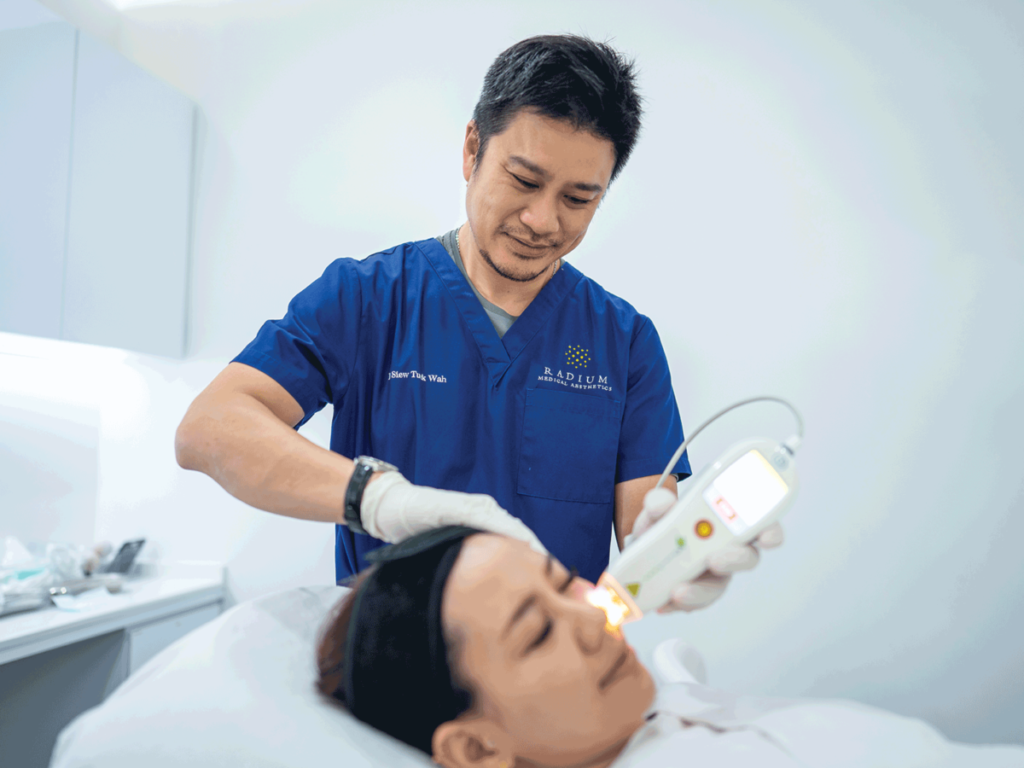
Understanding the Main Acne Scar Treatments
SUBCISION Subcision is used primarily for tethered rolling and selected depressed acne scars. It works by releasing fibrous bands beneath the skin that are pulling the scar downwards.
Learn more about subcision acne scar treatment.
TCA CROSS TCA CROSS is a focal treatment used primarily for deep ice-pick and selected narrow boxcar scars. A small amount of high-concentration trichloroacetic acid is applied directly into the scar to stimulate controlled healing and collagen remodelling.
Learn more about TCA CROSS treatment.
RF MICRONEEDLING RF microneedling combines fine needles with radiofrequency energy delivered at selected depths within the skin. It may be used to improve depressed acne scars, pores and uneven skin texture through collagen remodelling.
Learn more about RF microneedling for acne scars.
FRACTIONAL CO2 LASER Fractional CO₂ laser creates controlled microscopic treatment zones within the skin to stimulate resurfacing and collagen remodelling. It may be considered for selected acne scars and broader textural irregularities.
Learn more about CO₂ laser skin resurfacing.
Why Active Acne Matters Before Scar Treatment
If new inflammatory acne is still forming, new scars may continue to develop while existing scars are being treated.
For this reason, controlling active acne may form part of the overall treatment plan.
In some patients, acne and acne scars may be treated alongside one another, while others may need to stabilise active breakouts before more intensive scar procedures are performed.
Setting Realistic Expectations
Acne scar treatment aims to improve the depth, texture and appearance of scars.
It does not necessarily remove every scar completely.
The degree of improvement depends on factors such as:
- scar type
- scar severity
- treatment selected
- number of sessions
- skin characteristics
- individual healing response
Patients with deeper or mixed acne scarring may require multiple treatments over several months.
A Structured Approach to Acne Scar Treatment
The purpose of an acne scar framework is not to make treatment more complicated.
It is to make treatment more targeted.
By assessing the scars first, identifying the structures involved and reviewing the response over time, treatment can be adjusted according to the individual rather than relying on a standard protocol.
If you are unsure which type of acne scar you have, a medical assessment can help determine whether treatments such as subcision, TCA CROSS, RF microneedling or fractional CO₂ laser may be appropriate.