Cheek Filler Singapore: Restoring Midface Volume and Facial Contours
The cheeks play an important role in the appearance of the midface.
They influence:
- facial width
- midface projection
- the transition between the lower eyelid and cheek
- facial proportions
- how youthful or tired the face appears
With age, changes can occur in the skin, fat compartments, ligaments and underlying facial structure. This may cause the cheeks to appear flatter, less supported or more hollow.
In selected patients, cheek filler can be used to restore volume, improve contour and support facial proportions without surgery. However, not every flat or heavy-looking midface requires filler.
The important question is not simply: “Do I need more volume in my cheeks?”
It is: “What is actually causing the change in my midface?”
Learn more about dermal fillers in Singapore →
What Is Cheek Filler?
Cheek filler is a non-surgical injectable treatment that uses dermal filler to restore or enhance selected areas of the cheeks and midface.
Depending on the patient’s anatomy and treatment goals, filler may be placed to improve:
- cheek projection
- midface volume
- facial contours
- support around the upper cheek
- symmetry
- the transition between the under-eye and cheek
The treatment works by adding volume and structural support. It does not tighten loose skin, remove fat or permanently change the underlying bone structure.
What Can Cheek Filler Improve?
AGE-RELATED VOLUME LOSS As the face ages, selected fat compartments may lose volume or shift. This can make the cheeks appear flatter or more hollow. Carefully placed filler may help restore some of that lost support.
FLAT OR UNDER-PROJECTED CHEEKS Some patients naturally have less midface projection. Filler may be used to improve cheek contour in a way that remains proportionate to the rest of the face.
MILD FACE ASYMMETRY Differences between the two sides of the face are common. In selected patients, filler may help improve visible asymmetry.
MIDFACE CONTOUR Cheek filler may be used to create smoother transitions between the cheek, under-eye area and lower face.
FACIAL BALANCE The cheeks influence how other features such as the eyes, nose and jawline appear.
Improving midface structure may create better overall facial balance.
Learn more about under-eye filler →

Cheek Filler Is Not Just About Bigger Cheeks
One of the most common misconceptions is that cheek filler simply makes the cheeks larger.
That is not necessarily the goal.
In many patients, the objective is to restore support and contour rather than obvious volume.
Overfilling the cheeks can make the face appear:
- wider
- heavier
- swollen
- less defined
- less natural
For this reason, the amount and placement of filler matter as much as the product itself.
A conservative approach may produce a more natural result than adding large amounts of volume.
Learn more about chin filler →
Cheek Filler and Facial Ageing
Facial ageing is complex.
Changes may occur across several layers, including:
- skin
- fat compartments
- ligaments
- muscle
- bone
The midface is often one of the areas where these changes become noticeable.
Patients may see:
- flatter cheeks
- increased hollowing
- more visible nasolabial folds
- a tired appearance
- less support beneath the eyes
However, filler should not automatically be used to treat every age-related change.
If skin laxity is the main issue, adding more volume may make the face appear heavier rather than younger.
The treatment plan should therefore be based on the underlying cause.
Learn more about jawline filler →

Cheek Filler vs Under-Eye Filler
Cheek filler and under-eye filler can sometimes be related, but they are not the same treatment.
CHEEK FILLER Usually focuses on restoring or improving:
- midface support
- cheek projection
- selected areas of volume loss
- facial contour
UNDER-EYE FILLER Focuses more specifically on selected cases of tear trough hollowing beneath the eyes. In some patients, improving midface support can reduce the appearance of under-eye hollowing without directly placing filler beneath the eyes. In others, the under-eye concern may be caused by:
- eye bags
- pigmentation
- skin laxity
- swelling
- thin skin
These concerns may not improve with filler. This is why the cheek and under-eye areas should be assessed together.
Can Cheek Filler Lift the Face?
Cheek filler can sometimes create the appearance of better support in the midface. However, it should not be described as a true substitute for skin tightening or surgical lifting.
Filler works primarily by:
- adding volume
- improving contour
- restoring selected areas of structural support
If the main concern is significant laxity or sagging, filler alone may not be the most appropriate treatment. In those cases, skin-tightening or lifting treatments may be considered instead.

Cheek Filler vs Skin Tightening
Cheek filler and skin-tightening treatments address different problems.
CHEEK FILLER May be more suitable when the main concern is:
- volume loss
- insufficient projection
- structural deficiency
- selected contour changes
SKIN TIGHTENING May be more suitable where the main concern is:
- reduced skin firmness
- tissue laxity
- mild jowling
- general sagging
Some patients may benefit from one treatment. Others may require a combination. The appropriate approach depends on whether the issue is primarily volume loss, laxity, or both.
Cheek Filler and the Nasolabial Folds
Patients sometimes request filler directly into the nasolabial folds because they appear deeper with age. However, these folds can become more visible for several reasons, including:
- midface volume changes
- tissue descent
- facial anatomy
- skin laxity
In some patients, improving support higher in the cheek may soften the appearance of the fold without heavily filling the fold itself. The treatment should therefore be based on the cause rather than simply injecting the most visible line.
What Are the Risks of Cheek Filler?
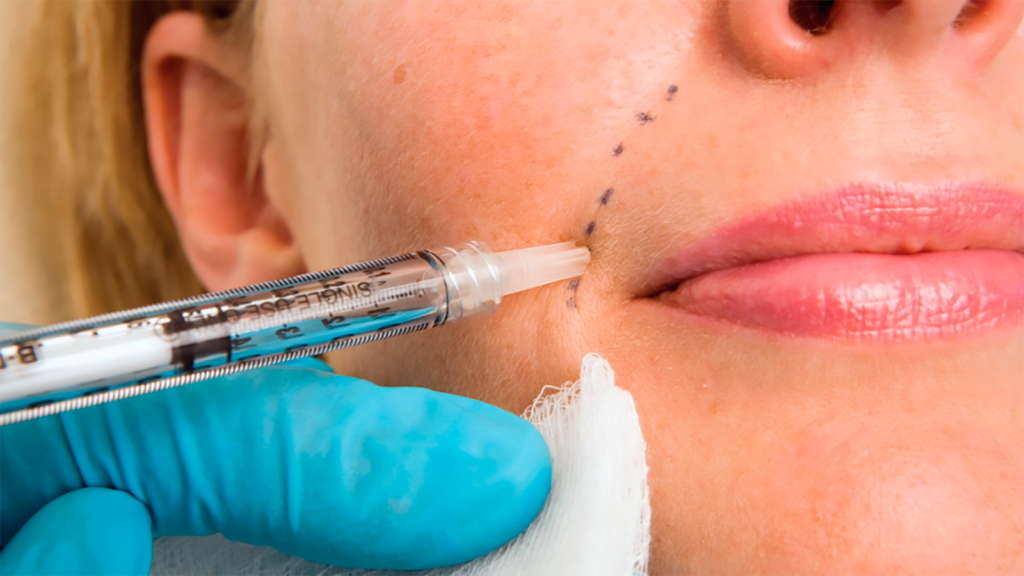
Cheek filler is a medical procedure and complications can occur.
Possible risks include:
- swelling
- bruising
- tenderness
- lumps or irregularities
- asymmetry
- infection
- inflammatory reactions
- filler migration
Rare but serious vascular complications can also occur if filler unintentionally enters or compresses a blood vessel. For this reason, treatment should be performed by a doctor who understands facial anatomy and is able to recognise and manage complications appropriately.
Cheek Filler for Men and Women
Cheek filler should not be based on a fixed male or female template. Different patients may prefer different degrees of projection, width and definition.
The treatment should be planned according to:
- individual anatomy
- face shape
- facial proportions
- personal aesthetic goals
The objective should be to enhance the face without creating a standardised look.

Dr Siew Tuck Wah's Approach to Cheek Filler
At Radium Medical Aesthetics, Dr Siew Tuck Wah assesses cheek filler as part of the overall face rather than as an isolated treatment area.
He considers the relationship between:
- cheek projection
- under-eye hollowing
- facial width
- nose
- chin
- jawline
- skin laxity
- age-related volume changes
The aim is to determine whether adding volume to the midface will genuinely improve facial balance. In some patients, cheek filler may be appropriate. In others, skin tightening, under-eye treatment or another approach may provide a better result. And in some cases, no filler may be recommended.
Learn more about Dr Siew Tuck Wah →

Frequently Asked Questions About Cheek Filler in Singapore
In selected patients with age-related midface volume loss, cheek filler may help restore contour and support.
However, facial ageing is not caused by volume loss alone.
The result depends on whether filler addresses the underlying concern.
Sometimes.
Improving midface support may reduce the appearance of under-eye hollowing in selected patients.
However, true tear trough hollows, eye bags, pigmentation and swelling may require different treatment approaches.
It can if too much filler is used or if placement is inappropriate.
This is why treatment should be customised according to facial width and proportions.
It may soften their appearance in some patients by improving midface support.
However, nasolabial folds have multiple causes and may not disappear completely.
There is no standard amount.
The required volume depends on facial anatomy, degree of volume loss and treatment goals.
Cheek filler may be considered for patients with:
- age-related midface volume loss
- flat or under-projected cheeks
- selected asymmetry
- reduced cheek definition
- loss of structural support
- selected contour concerns
Suitability depends on whether adding volume is likely to improve the face.
Cheek filler may not be the right treatment if the main concern is:
- significant skin laxity
- heavy lower-face sagging
- excessive facial fullness
- pronounced swelling
- unrealistic expectations
- significant structural issues better addressed surgically
Patients with certain medical conditions, active infection or previous filler complications should also be assessed carefully.
Cheek filler is temporary.
Longevity varies according to:
- filler used
- amount injected
- treatment depth
- metabolism
- facial movement
- individual biology
Structural fillers used in the cheeks may last longer than softer fillers used in more mobile facial areas, but there is no single duration that applies to every patient.
Your doctor can advise on expected longevity according to the product used.
Yes.
Natural-looking cheek filler depends on:
- facial proportions
- product selection
- placement
- treatment volume
- understanding of the patient’s existing anatomy
The aim should not be to create the same high, projected cheek shape on every patient.
Some faces suit more projection.
Others may look better with subtle restoration of lost volume.
The treatment plan should preserve the patient’s individual facial identity.