Pigmentation Treatment in Singapore: Melasma, Dark Spots & Uneven Skin Tone
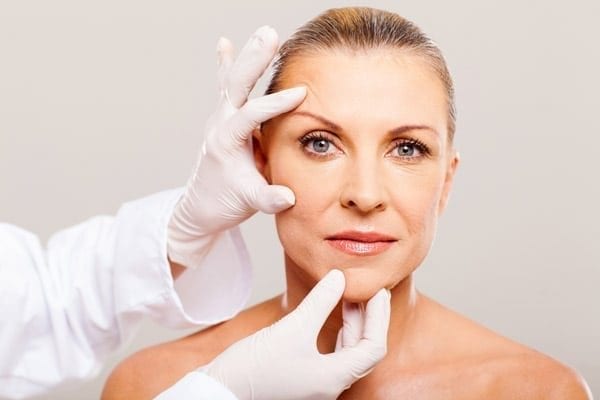
Pigmentation is one of the most common skin concerns treated at aesthetic clinics in Singapore. It may appear as freckles, sunspots, melasma, post-inflammatory pigmentation or darker patches that make the complexion look uneven.
However, not all pigmentation is the same. Different pigment disorders occur at different depths within the skin and may be influenced by factors such as sun exposure, hormones, inflammation, genetics and ageing. A treatment that works well for superficial sunspots may therefore be unsuitable for melasma or deeper dermal pigmentation.
Effective pigmentation treatment begins with identifying what type of pigmentation is present, how deep it is and what may be triggering it. This guide explains the common forms of pigmentation, how doctors assess them, treatment options such as Pico laser and BBL, possible risks and why some pigmentation can return even after treatment.
What Causes Skin Pigmentation?
Melanin is the pigment responsible for skin colour. It is produced by specialised cells known as melanocytes. When melanocytes produce increased or uneven amounts of melanin, certain areas of the skin may become darker than the surrounding skin. This is known as hyperpigmentation.
Pigment production may be triggered by ultraviolet exposure, hormonal changes, inflammation, skin injury, heat, visible light, genetics, certain medications and ageing. Once produced, melanin is transferred into surrounding skin cells, creating visible areas of darker pigmentation. The depth of the pigment matters because it influences how the condition behaves and how it may respond to treatment.
Epidermal, Dermal and Mixed Pigmentation
EPIDERMAL PIGMENTATION is located closer to the surface of the skin. Freckles, some sunspots and certain forms of post-inflammatory pigmentation fall into this category and may respond more readily to topical treatments or pigment-targeting devices.
DERMAL PIGMENTATION sits deeper within the skin. Conditions such as Hori’s Naevus and Nevus of Ota involve deeper pigment and generally require a more gradual treatment approach.
Some patients have mixed pigmentation, where pigment exists at different depths. Melasma is a common example and may contain both epidermal and dermal components. This is one reason why melasma often requires a combination approach rather than relying on a single laser treatment.
What Causes Pigmentation to Develop?
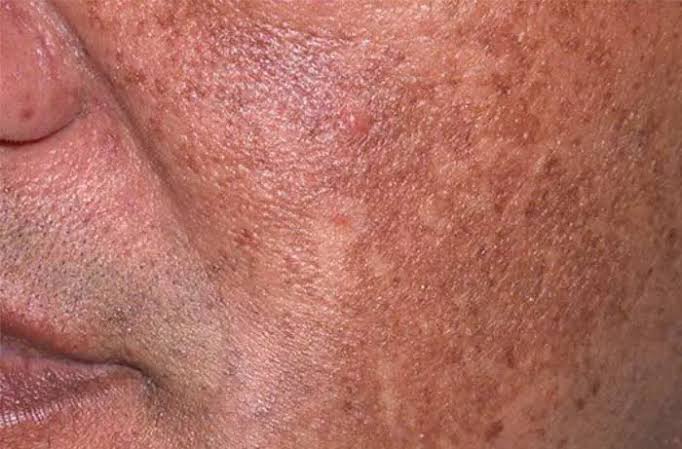
Sun exposure is one of the most important triggers. Ultraviolet radiation stimulates melanocytes to produce additional melanin, and repeated exposure over many years can contribute to freckles, sunspots and uneven skin tone.
Hormonal fluctuations may also increase melanocyte activity, which is one reason melasma commonly develops during pregnancy or in association with hormonal medication. Heat and visible light may further aggravate pigmentation in susceptible individuals, particularly those with melasma.
Inflammation is another common trigger. Acne, eczema, burns, allergic reactions, skin injury and even overly aggressive cosmetic procedures can stimulate excess melanin production. This is known as post-inflammatory hyperpigmentation, or PIH.
Genetics and ageing also play a role. Some pigment conditions tend to run in families, while years of accumulated UV exposure can result in increasing numbers of sunspots and areas of uneven pigmentation.
Why Does Pigmentation Come Back?
One of the most common questions patients ask is why pigmentation can return after laser treatment.
Treatment may reduce existing pigment, but it does not permanently stop melanocytes from producing melanin. If the original trigger remains -such as sunlight, hormones, inflammation or genetic tendency – new pigmentation can develop.
This is especially important in melasma, where the tendency to produce pigment often remains even after visible improvement.
For this reason, pigmentation treatment is often best viewed as a management strategy rather than a one-off procedure. Laser or light-based treatment may form one part of the plan, together with sunscreen, appropriate skincare, trigger management and maintenance where required.
Types of Pigmentation
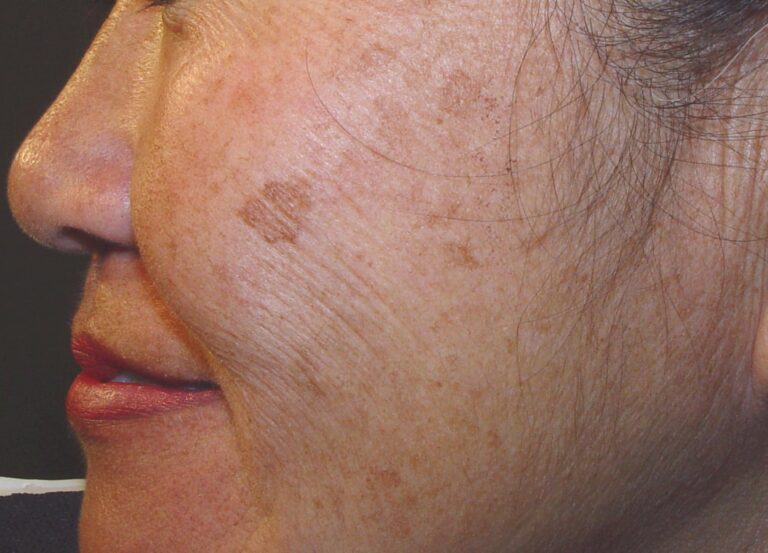
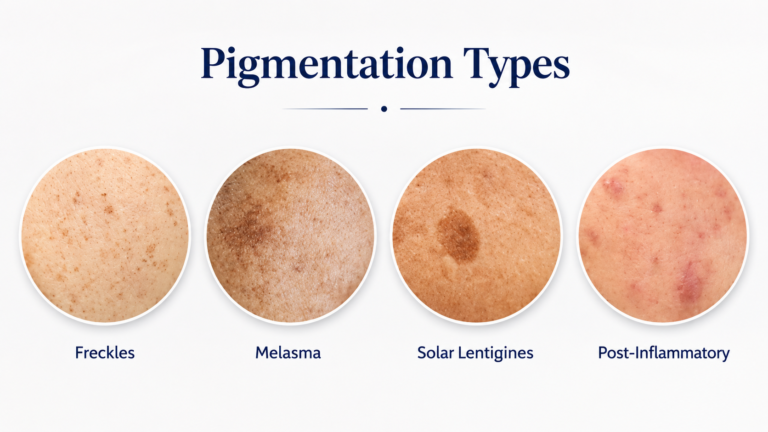
MELASMA Melasma typically appears as symmetrical brown or grey-brown patches over areas such as the cheeks, forehead, nose, upper lip or chin. Unlike a simple sunspot, melasma often develops because of several contributing factors, including hormones, pregnancy, genetics, ultraviolet exposure, heat, visible light and inflammation. It also has a tendency to recur. Treatment therefore focuses not only on reducing visible pigment but also on reducing aggravating factors and maintaining improvement over time. Depending on the individual, management may involve pigment-targeting treatments, prescription or medical skincare, medication in selected patients, sun protection and maintenance treatment.
Learn more about melasma treatment in Singapore →
SUNSPOTS AND AGE SPOTS Sunspots, also known as solar lentigines, usually develop after years of cumulative sun exposure. They tend to appear as flat, well-defined brown areas on frequently exposed parts of the skin such as the face, hands and chest. Because many sunspots are relatively superficial, they may respond well to pigment-targeting treatments. However, new lesions can continue to develop if sun exposure is not adequately controlled.
FRECKLES Freckles are small brown spots that are strongly influenced by genetics and sun exposure. They often darken after UV exposure and may fade when sun exposure decreases. Treatment may lighten freckles, although they can return with continued sun exposure.
POST-INFLAMMATORY HYPERPIGMENTATION Post-inflammatory hyperpigmentation develops after the skin has been inflamed or injured. Common triggers include acne, eczema, burns, insect bites, scratching and cosmetic procedures. PIH is particularly common in darker skin types and may range from light brown to grey depending on the depth of pigmentation. Treatment should address the underlying inflammation as well as the pigmentation. For example, active acne should usually be controlled before focusing heavily on residual marks.
HORI’S NAEVUS Hori’s Naevus typically appears as grey-brown or blue-grey spots around the cheekbones, temples and lower eyelids. Because the pigment lies deeper in the dermis, it can sometimes be mistaken for melasma but behaves differently and generally requires a different treatment strategy. Several treatment sessions are often needed because of the depth of the pigment.
NEVUS OF OTA Nevus of Ota is a deeper pigment condition that often appears as blue-grey pigmentation affecting one side of the face. It may involve areas around the forehead, temple, eye or cheek, and in some individuals may also involve the sclera of the eye. Because the pigment sits deep within the dermis, treatment usually requires multiple sessions.
CAFE-AU-LAIT MACULES AND CEBORRHOEIC KERATOSES Café-au-lait macules are flat, light-brown patches that are usually present from childhood. Treatment may lighten some lesions, although complete clearance is not always possible. Seborrhoeic keratoses, by contrast, are benign skin growths rather than simple excess pigmentation. They may look brown or black and can appear raised, waxy or rough. Because they are structurally different from pigmentation, treatment is also different and requires assessment first.
MIXED PIGMENTATION Many patients have more than one type of pigmentation at the same time. For example, a patient may have melasma together with sunspots and post-inflammatory pigmentation. Treating only one component may leave the others relatively unchanged, which is why diagnosis and treatment planning are important before beginning any pigmentation procedure.
How Is Pigmentation Diagnosed Before Treatment?
Successful pigmentation treatment begins with identifying the condition correctly.
During consultation, the doctor may ask when the pigmentation appeared, whether it has changed over time, whether there is a family history, whether hormonal factors may be relevant and what treatments or skincare have previously been used.
The appearance and distribution of the pigment also provide useful clues. Symmetrical patches on both cheeks may suggest melasma, while isolated, sharply defined brown spots may be more consistent with solar lentigines.
Skin type is also important because darker skin types may have a greater tendency to develop post-inflammatory hyperpigmentation after aggressive treatment. Treatment therefore needs to be selected and adjusted appropriately.
The doctor will also consider whether the pigmentation appears primarily epidermal, dermal or mixed, as this influences the type of treatment, expected response and number of sessions required.
Not every dark lesion should be treated cosmetically. Pigmented lesions that are new, changing rapidly or have unusual features should be assessed appropriately before any aesthetic procedure is performed.

Pigmentation Treatment Options in Singapore
There is no single treatment that can address every pigment condition. The most appropriate approach depends on the diagnosis, pigment depth, skin type, previous treatment, recurrence risk and the amount of downtime the patient is comfortable with.
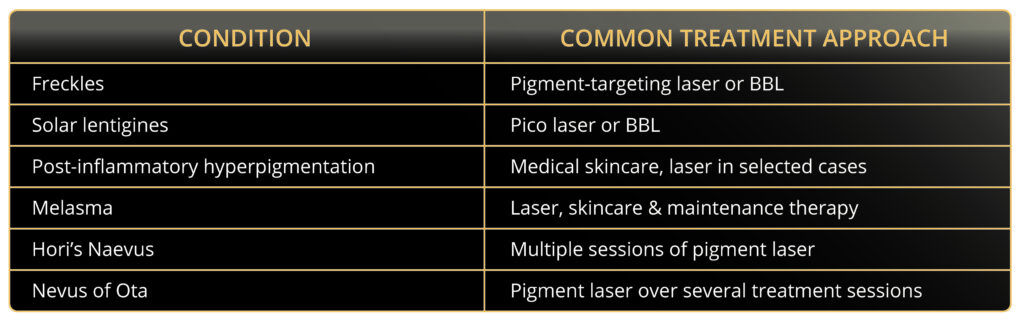
PICO LASER FOR PIGMENTATION Picosecond lasers deliver extremely short pulses of laser energy that can be used to target selected pigment conditions. The short pulse duration produces a strong photoacoustic effect that helps fragment pigment particles, which are then gradually cleared by the body. Depending on the diagnosis and skin type, Pico laser may be considered for freckles, sunspots, solar lentigines, Hori’s Naevus, Nevus of Ota, post-inflammatory pigmentation, mixed pigmentation and selected cases of melasma. Superficial pigmentation may sometimes improve after relatively few sessions, while deeper dermal pigmentation generally requires a longer treatment course.
Learn more about Pico laser treatment →
BROADBAND LIGHT (BBL) BroadBand Light uses pulses of filtered light rather than laser energy and may be suitable for selected superficial pigmentation, sun damage, freckles, age spots and uneven skin tone. Because BBL can also target certain visible blood vessels, it may be useful in patients who have both pigmentation and redness. It is generally less suited to deeper dermal pigmentation such as Hori’s Naevus or Nevus of Ota, where another technology may be more appropriate.
FRACTIONAL LASER TREATMENT Fractional lasers create microscopic treatment zones within the skin and are more commonly used for concerns such as acne scars, skin texture and wrinkles. In selected patients they may form part of a broader pigmentation treatment plan, but they are not necessarily the first choice for every pigment condition. This is particularly important in melasma, where excessive inflammation may potentially worsen pigmentation in susceptible individuals.
MEDICAL SKINCARE Skincare can play an important role in both treatment and maintenance. Depending on the condition, ingredients such as vitamin C, retinoids, azelaic acid, niacinamide, tranexamic acid, hydroquinone, cysteamine or kojic acid may be considered. Not every ingredient is suitable for every patient, and some active ingredients may cause irritation if introduced too aggressively, particularly in patients with sensitive skin or melasma.
ORAL MEDICATION For selected patients with melasma, oral medication may sometimes form part of the treatment plan. Tranexamic acid, for example, has been studied for melasma, but it is not suitable for everyone and requires assessment of medical history and individual risk factors before prescribing.
CHEMICAL PEELS Chemical peels may help selected cases of mild pigmentation, uneven tone and post-inflammatory pigmentation. They may be used on their own or alongside other treatments, depending on the type of pigmentation and the patient’s skin.
COMBINATION TREATMENT Pigmentation is often influenced by several factors at the same time. For example, a patient with melasma may have pigment at different depths as well as inflammation, vascular changes or impaired skin barrier function. For this reason, treatment may sometimes combine laser or light-based treatment with skincare, prescribed medication, sun protection and maintenance rather than relying on a single procedure.
Which Pigmentation Treatment Is Right for Me?
There is no universally appropriate pigmentation treatment. A patient with a few superficial sunspots may require a very different approach from someone with long-standing melasma or deeper dermal pigmentation.
Treatment selection should consider the diagnosis, pigment depth, skin type, medical history, previous treatments, recurrence risk and desired downtime. This is why the question is usually not “Which laser is best?”, but rather “Which treatment is appropriate for this particular type of pigmentation?”
How Many Pigmentation Treatment Sessions Will I Need?
The number of sessions varies considerably.
Superficial pigmentation may respond relatively quickly, while deeper pigmentation generally requires more gradual treatment. Melasma often needs a longer-term strategy because improvement can occur while the tendency for pigmentation remains.
Progress should therefore be reviewed over time and the treatment plan adjusted according to response.
Pigmentation Treatment Cost in Singapore
The cost of pigmentation treatment varies depending on the condition and treatment required. Treating a few isolated sunspots is very different from managing long-standing melasma affecting a large area of the face. Treatment cost may therefore depend on the technology used, number of treatment areas, number of sessions and whether combination therapy is required.
A consultation allows the doctor to recommend an appropriate treatment plan and provide a more accurate estimate.
Possible Side Effects and Risks
Expected treatment effects may include temporary redness, swelling, warmth, dryness, sensitivity, flaking or temporary darkening of treated pigmentation. Less common complications can include post-inflammatory hyperpigmentation, temporary hypopigmentation, prolonged redness, blistering, infection, scarring or recurrence.
The likelihood of these complications varies according to the treatment performed, skin type, treatment settings and individual healing response. Appropriate patient selection, individualised treatment parameters and aftercare are important in reducing treatment-related risk.
Can Pigmentation Be Removed Permanently?
It depends on the condition. Some superficial pigmentation such as certain freckles or sunspots may improve significantly following treatment. Other conditions, especially melasma, have a greater tendency to recur because melanocytes remain capable of producing additional pigment when triggered by sunlight, hormones, heat or inflammation.
For many patients, the goal is therefore to reduce visible pigmentation, improve overall skin tone and minimise recurrence rather than promise permanent removal.
How to Reduce Pigmentation Recurrence
Daily sun protection remains one of the most important measures.
Patients with recurrent pigmentation may also benefit from appropriate skincare, managing inflammation early, avoiding excessive irritation and following a maintenance plan where required. Those with melasma may find that prolonged heat exposure can aggravate their pigmentation, although triggers vary from person to person.
Maintaining a healthy skin barrier is also important because irritation and inflammation can contribute to further pigment production.
Frequently Asked Questions About Pigmentation Treatment
There is no single treatment that is appropriate for every form of pigmentation. The most suitable approach depends on the diagnosis, pigment depth, skin type and treatment goals.
Different lasers target different pigment conditions and depths. A doctor should assess the pigmentation before deciding which technology is appropriate.
Melasma is one type of pigmentation, but not all pigmentation is melasma.
Melasma tends to appear as symmetrical brown or grey-brown patches and is commonly influenced by hormones, ultraviolet exposure, heat and genetics. It also has a greater tendency to recur than many isolated sunspots or freckles.
Pigment-targeting lasers may sometimes cause temporary darkening or post-inflammatory hyperpigmentation, particularly in susceptible skin types or after aggressive treatment.
Treatment settings should therefore be selected according to the diagnosis and individual skin response.
It depends on the pigmentation.
BBL may be useful for selected superficial pigmentation and sun-related skin changes, while Pico laser may be considered for a broader range of pigment depths and conditions.
Neither is automatically the better option for everyone.
Superficial pigmentation may improve after relatively few treatments, while deeper dermal pigmentation or melasma may require multiple sessions and ongoing maintenance.
Yes. Treating existing pigment does not remove the underlying tendency to produce new pigment. Sun exposure, hormones, inflammation and other triggers may contribute to recurrence.
Many elective pigmentation treatments are postponed during pregnancy. Appropriate timing should be discussed with your doctor according to your individual circumstances.
No. Some dark lesions may represent moles, seborrhoeic keratoses or other skin conditions rather than simple hyperpigmentation.
New, unusual or changing lesions should be medically assessed before cosmetic treatment.
Why Choose Radium Medical Aesthetics for Pigmentation Treatment?
Pigmentation treatment begins with identifying what type of pigmentation is present.
At Radium Medical Aesthetics, our doctors assess factors such as the appearance, distribution and likely depth of pigmentation, together with possible triggers and previous treatments, before recommending a treatment plan.
Depending on the diagnosis, treatment may involve pigment-targeting lasers, light-based technologies, medical skincare, prescription treatment or a combination approach.
The aim is not simply to treat visible pigment but to develop a strategy that considers skin health, recurrence and long-term management.
If you are concerned about melasma, sunspots, freckles, post-inflammatory pigmentation or uneven skin tone, a consultation allows the doctor to assess your skin and discuss which treatment options may be appropriate.
Make an appointment with Dr Phoon Yi Shan →